
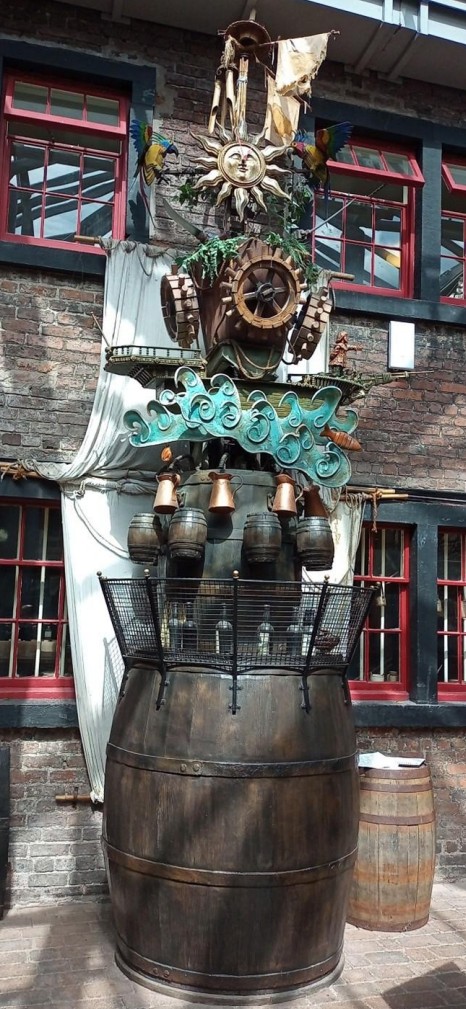
The Rum Story visitor centre, in the heart of the coastal town of Whitehaven in Cumbria, has undergone the first phase of its re-imagination. The attraction recalls a bygone age when ships from the Caribbean unloaded their cargo at Whitehaven, the eighteenth century’s third-busiest port after London and Liverpool.
A central feature is The Rum Story Clock, which was installed and commissioned to celebrate the Millennium in 2000. With its carved and sculpted wooden and metal parts, it can be described as an example of automata or a kinetic feature.
Traditional methods were used to craft the structure, while the internal workings combine pneumatics, synchronous motors and PLC control.
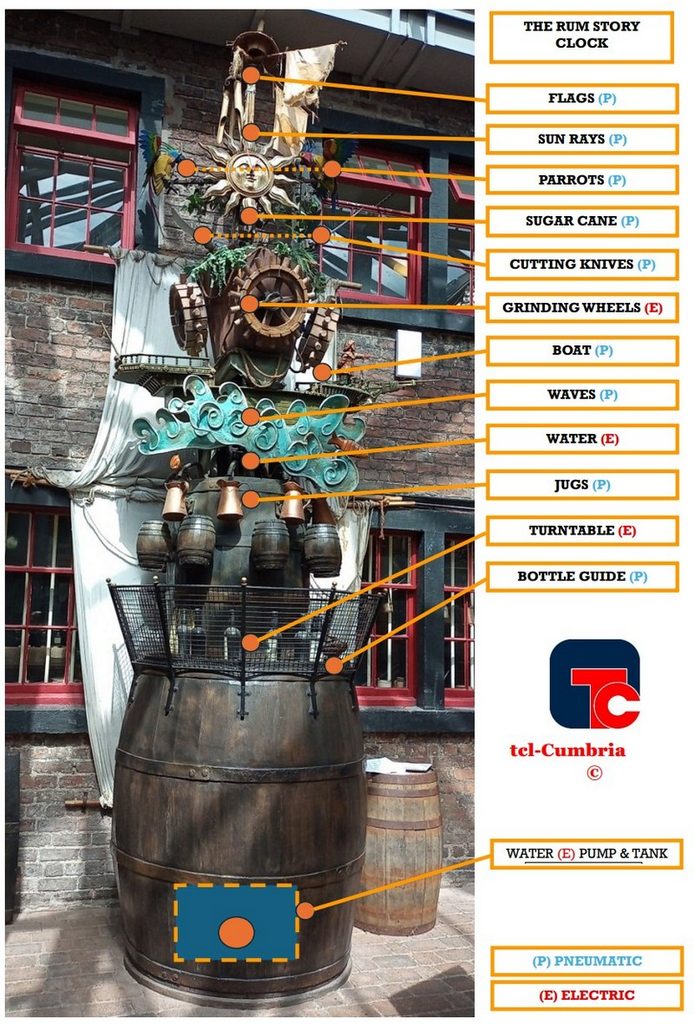
TCL-CUMBRIA’s original role was to apply mechatronics expertise to animate the various parts in sequence and tell the story of rum making. Pneumatic actuators and electric motors move the mechanical linkages under the control of an electronic programmer.
The work also included sizing and selecting the air compressor and its ancillary equipment. Compressed air was originally provided by a Bambi Model 225/1000: a medical-standard, 57dBA multiple-pump unit with a common air receiver. It delivered high-quality air through a coalescing filter while keeping running noise to a minimum within an open visitor area.
A total of 12 air cylinders operate the smaller linear movements. Three rotary actuators provide the twisting movements for the flags and knives, while a rodless cylinder assists the growth of the sugar cane. Two synchronous motors power the grinding wheels and a turntable, and an electric pump delivers ‘rum’ into the copper measures.
The labelled clock diagram shows the combination of electric and pneumatic operation throughout the feature. The flags, sun rays, parrots, sugar cane, cutting knives, boat, waves, jugs and bottle guide are pneumatically operated. The grinding wheels, water system, turntable, pump and tank are electrically operated.
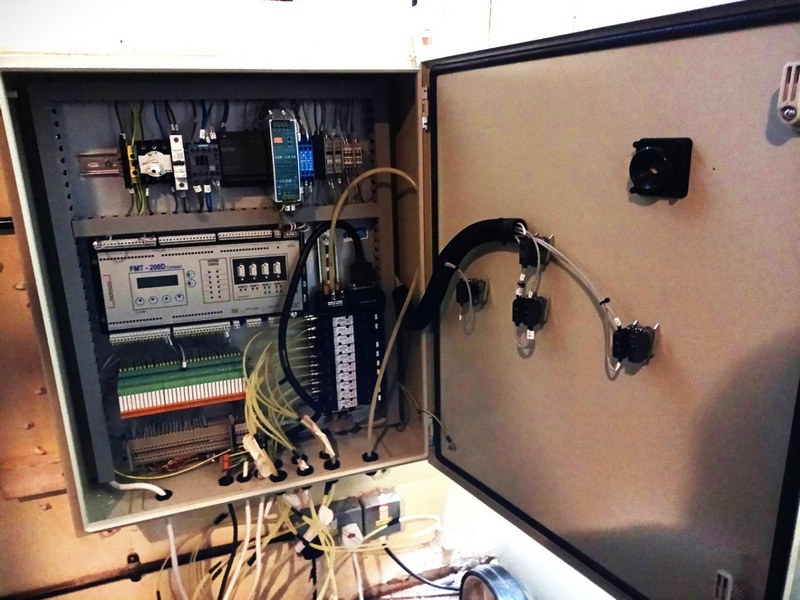
The complete control system comprises an 84 I/O PLC, Human Machine Interface, electro-pneumatic valve bank and uni-directional speed controls.
The PLC is programmed using a text-based software package downloaded on site using a laptop, rather than a hand-held programmer. The HMI is programmed using compatible software. In keeping with the theme of the clock, there are no sensors: all the movements are time-based and use the PLC’s inbuilt timers and counters.
Every 30 minutes, the clock springs into life from top to bottom. Flags wave to make the connection between Antigua in the Caribbean and the United Kingdom. The clock then depicts the growing of sugar cane, the processing of the stalks into a sugar and molasses pulp and the transportation of the molasses across the Atlantic Ocean to the west coast of the UK.
Its destination is the port of Whitehaven, where the molasses was processed by the Jefferson family to produce its famous rum.
It has been calculated that the clock feature had completed nearly 750,000 cycles before signs of deterioration within the structure brought it to a halt.
The situation was brought to the attention of Ian Stephenson, Managing Director of TCL-CUMBRIA, by Deanne Shallcross, CEO of Whitehaven Harbour Commissioners.
Ian undertook the role of adviser, facilitator and organiser. He enlisted the support of Mark Telford, Managing Director of Forth Engineering, whose mechanical engineering and electrical assembly resources were used to analyse the faults and carry out the necessary work. Steve Blackwell, Technical Director at Core Nuclear Solutions, was enlisted to resolve the programming issues.
The team began work on the project towards the end of 2025, with a target completion date timed to coincide with the 2026 summer visitor season. This was achieved, with the clock restarting during the launch ceremony for Phase One of The Rum Story Re-Imagined.
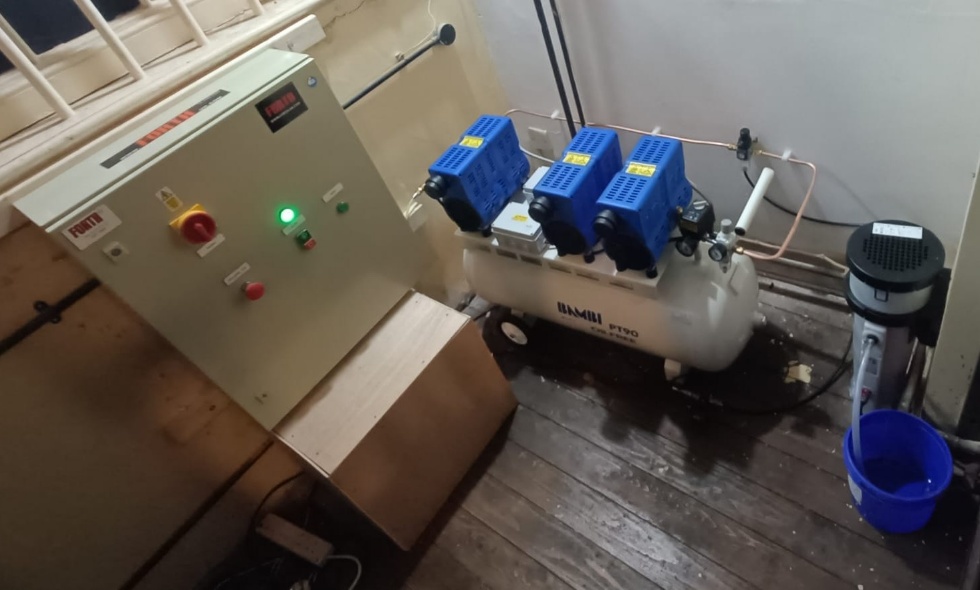
As part of the refurbishment programme, the original compressor was replaced by a newer Bambi Model PT90. Additional oil-water separation and filtration units were installed to meet modern standards.
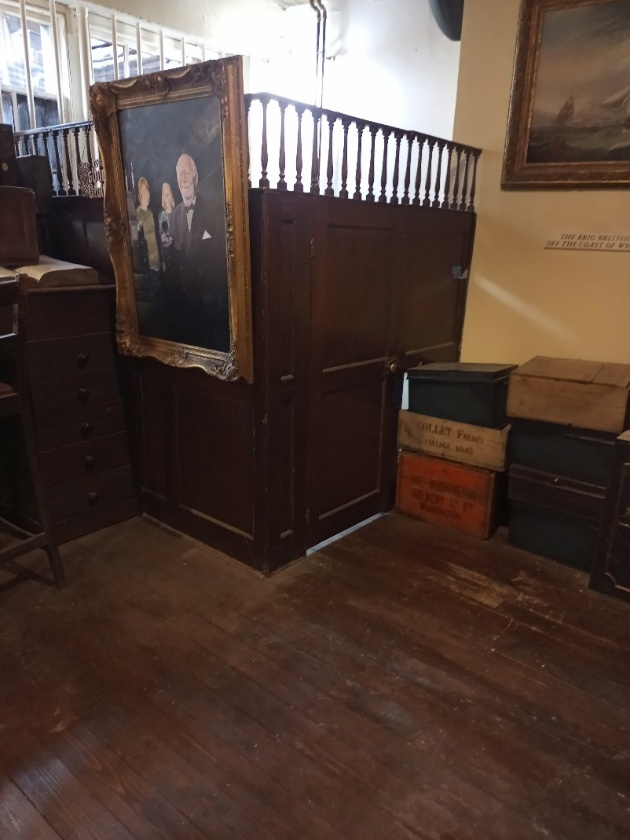
The compressor and electro-pneumatic control cabinet are housed in a corner store within the Clerk’s Office. The control cabinet contains the Programmable Logic Controller, electrical and mechanical switchgear, power supplies, electrical relays and electro-pneumatic valve bank. Manual switches are fitted to the cabinet door.
Josh Oakes, Operations Manager at Forth Engineering, said:
“The Forth Engineering team were proud to play a key role in bringing the iconic Rum Story Clock in Whitehaven back to life – a remarkable kinetic feature that has been telling the story of rum-making since its installation in 2000.
“We worked in close collaboration with Ian Stephenson of TCL-CUMBRIA, co-builder of the original clock and a driving force behind its revival, alongside Core Nuclear Solutions, who supported the project by resolving complex programming challenges.
“Guided by Ian’s extensive knowledge of the feature, Forth’s mechanical and electrical teams carried out detailed fault analysis, repair and restoration of this much-loved moving display.
“After completing nearly 750,000 cycles, years of wear and missing components eventually brought the clock to a halt. Through strong collaboration and specialist engineering expertise, we’re proud to have helped return it to full operation in time for the launch of The Rum Story Re-Imagined.”
Katy Haigh, The Rum Story Development Manager at Whitehaven Harbour Commissioners, said:
“At the start of The Rum Story Re-Imagined project in 2025, my job was to consult and engage with people from Whitehaven and further afield to learn how Whitehaven Harbour Commissioners should improve The Rum Story. We wanted to find out how we could make it busier, more engaging, thought-provoking, accessible and inclusive.
“From day one, over and over, people kept saying, ‘Get The Rum Story clock working again.’ So many people were passionate that the kinetic courtyard clock, which had been broken for over a decade, should be restored.
“People remembered it fondly from their childhood. They remarked on what a fine example of automata it was and described it as the beating heart of the attraction.
“I could not have been more pleased when Ian Stephenson contacted me with a viable proposal to get this much-loved piece of heritage working again.
“Over a year, a team of local companies and individuals with engineering expertise, including Forth Engineering and TCL-CUMBRIA, came together to restore the clock. Fixing it before now had been impossible because of cost, so, along with support from the National Lottery Heritage Fund, the project team gave hundreds of hours of time in kind to make it possible.
“Whitehaven Harbour Commissioners has been bowled over by their generosity, care and dedication. This challenging restoration highlighted the remarkable engineering expertise and creative and collaborative capabilities we have in West Cumbria. It also showed how much positive impact private companies and not-for-profit organisations can make when they work together for the benefit of their local communities.”
The restoration is a successful example of collaboration and the culmination of many hundreds of in-kind hours contributed through Forth Engineering’s craftsmen, Core Nuclear Solutions’ expertise and TCL-CUMBRIA’s knowledge and experience.
The clock now springs into life every half hour in the courtyard of The Rum Story. It can also be seen operating approximately 14 minutes into this video tour of The Rum Story.
Following interest from visitors, a Kinetic Clock Workshop has also been delivered to explore the art, mechanics and technology behind the clock.